Showing posts with label history. Show all posts

Tuesday, November 5, 2013

ARC Review: Princesses Behaving Badly

Princesses Behaving Badly by Linda Rodriguez McRobbie
3/5 stars
Quirk Books, 2013
278 pages
Non-Fiction History
Scheduled to release November 19

Source: Received an e-ARC from the publisher through Edelweiss in exchange for an honest review.

I have frequently talked about my love of princesses and fairy tales so I loved the hook for this book, which references real-life princesses and how their lives don't really fit that mold for whatever reason, often because of their excesses and/or insanity.

Something I appreciated was reading about princess outside of Europe; yes, we look at a few princesses from Asia, Africa and even the Americas though most are based in various Europe countries. However the definition of princess and real is very flexible. Several of these women merely styled themselves as princess without the ancestry one would expect and several of the stories are most probably from mythology and not well grounded in fact. I thought they were fascinating nonetheless but go against what the very title of this book promises.

In general, I found the tone of this book very gossipy, which quite frankly works for me as gossip sites are some of my favorite pleasure reading (my fave for the past four or so years is Lainey Gossip). It was disconcerting though as I'm used to such figures being treated with a bit more reverence. But this book relishes in their profligate ways and sexual excesses. It started to feel overwhelming especially as I read this book in about one day. I was personally shocked at some of what was described-a good reminder that it is not just our era where we see unbelievable wealth and reckless spending.

Probably the most interesting tidbit for me was the examination of Juana the Mad, who I thought was a sad byproduct of royalty's tendency toward inbreeding. However this author suggests that she was framed as mad so the men in her life could rule in her stead. I'm embarrassed that I never considered this possibility and merely accepted this story spoonfed to me.

Overall: A rollicking ride through history looking at some overlooked or even forgotten women who made their mark on history.

*A note: I read an e-ARC that was sorely in need of some editing; I assume the finished copy will be corrected because there were some terrible errors. The finished copy should also contain a bibliography, which was sadly missing here as I would like to explore some of these figures through a more scholarly lens.

Saturday, July 13, 2013

Battleship

Battleship by Dorothy Ours
3/5 stars
St. Martin's Press, 2013
276 pages
Adult History Non-Fiction

Source: Received an ARC from Amazon Vine in exchange for an honest review.

This book first got my attention when I saw it featured by the publisher on Netgalley; unfortunately my copy expired before I got to it so I was pleased to see it for offer on Amazon Vine, giving me another chance to check out what seemed to be billed as a very gripping read. While it was not to my taste, I think there will be fans of the story.

I've always heard that little girls love horses but maybe there was something wrong with me because I never got it. Horses are big and smelly and I had less than zero interest in them. Instead I was interested in this book because of the billing of a daring heiress (Marion duPont), teenage jockey (Bruce Hobbs), an American horse (the titular Battleship), and the converging paths of all the people necessary to make a racing legend like Battleship.

The conclusion to this book with that final race that made his name was very exciting. It shows clearly all the hard work and time invested that was necessary to reach that point. However many of the passages before that bored me. There was so much information about horses and racing and I did not care nor did I need full recaps of all the races that even remotely related to the story. My expectation of this book was that it would be filled with engaging writing and be accessible to laymen and I don't feel like it met either of those.

I did enjoy the passages that focused more on the humans especially Marion's life of seemingly confirmed spinsterhood in an era that really condemned such a fate to two somewhat surprising marriages against her lifelong passion for horses. The jockey, Bruce's, story was also fascinating with his tough upbringing under his strict horse-mad trainer father that led to the very tall young man riding to victory on a comparatively small horse.

Overall: Not to my taste at all!

Note: As I read an ARC, it lacked footnotes or endnotes and pictures, both of which I hope are in the final product. I would love to see how Battleship stacked up next to the bigger horses mentioned over the course of the novel.

Saturday, March 16, 2013

The Secret Lives of Codebreakers

The Secret Lives of Codebreakers by Sinclair McKay
4/5 stars
Plume, 2012
Originally published by Aurum Press, 2010
322 pages
Adult Historical Non-Fiction

Source: Library

I picked this up after having my interest piqued with the news that "The Bletchley Circle" will be coming to PBS in April. This show follows women who had worked at Bletchley Park during WWII. I was also interested in the life and times of Maggie Hope and just a general interest in code breaking.

Although I knew a little about breaking the German Enigma code, there was still much ground to explore as this book covers some of the ciphering that went on during World War I as well as the time period leading up to the second world war; there were those prescient enough to plan ahead so that England had a jump start when war did break out. Then of course this covers through the war and its aftermath, including decades long silence on the part of its participants. They still don't know everyone who worked here as records weren't kept and some have taken/will take the secret to the grave.

This book captured well the intensity of life at Bletchley Park alternating with the tedious parts. They worked eight hour shifts around the clock, switching shift times every week. Some of the work was repetitious and much of it was dull albeit vital. Because of the young women who cross-referenced the deciphered work painstakingly on index cards, they were able to stockpile and analyze a great amount of information that may have aided and cut down on the length of the war.

The amazing thing to me is how secret this was kept. People in the nearby town knew something was happening. Relatives of the men here wondered why they weren't at the front. But for the most part, people just kept their heads down and didn't probe. I'm so amazed at the lack of blabbing and the general agreement of everyone to just keep going. The reminiscences of people further back up the attitude of the time.

Overall: An interesting book about something I bet most Americans don't know much about. I would have liked to read more about the actual code breaking but this was very absorbing and educational.

Monday, June 11, 2012

Death by Petticoat


Death by Petticoat by Mary Miley Theobald
3/5 stars
Andrew McMeel Publishing, LLC, 2012
126 pages
Non-fiction; American History

Source: Received an e-ARC via Netgalley in exchange for an honest review.

I love the idea for this book-it is right up my alley as a history major who specialized in US history. I love collections of truths and myths that break them down in easy-to-read ways and this looked like the perfect quick read for me.

And it was a quick read. Each entry is only about one page and includes a picture to further illustrate the point. The writing was easy to read and due to the shortness, you can very quickly read this book. I think it would be fun to pick it up and read an entry or two at a time. It looks like a nice book to support The Colonial Williamsburg Foundation and its missions of preservation and education.

However I ended up being disappointed on a few counts. First the focus is mostly on colonial times (which is forecast by the collaboration with The Colonial Williamsburg Foundation but which I didn't notice). I thought it would cover a longer period of time and be more mixed. But most of the myths come from colonial times with just a few from later days. Second was the myths themselves, most of which I had never even heard of-two separate mentions of room taxes as a for example. I guess these are questions that tourists ask when visiting Colonial Williamsburg, which makes me very worried for our school system if in fact American-educated people are thinking these things are true. My expectations were that I would have at least heard of the myths even if I knew they were false from my more specialized studying.

Overall: Good for some light reading but not recommended for history scholars.

Tuesday, April 17, 2012

Island of Vice

Island of Vice by Richard Zacks
4/5 stars
Doubleday, 2012
366 pages
Historical Non-Fiction

Source: Received an ARC through Amazon Vine in exchange for an honest review.

This is a hard review for me to write because I do not read much non-fiction. And most of what I have read in the past years was for academic research, not for fun. While I could produce an academic paper on this book, that would be decidedly not fun and it would not fit the content of my blog and general review style. But I still would like to be informative so here's my attempt :)

I was attracted to this book due to the presence of a certain Mr. Roosevelt, aka my favorite president and inspiration for my user name. 1858 is his birth year and TR was also a voracious reader, although I expect he read much more non-fiction than I did. This book covers the years of Roosevelt as a police commissioner on a mission to rid New York City of its vice, something that the people of NYC don't really want to do. Sure they don't want murderers, destruction of property, or burglaries but drinking, gambling, and prostitution were immensely popular activities and corruption within the Tammany Hall dominated police force was rampant.

Spurred by (mostly) Republican, native-born, wealthy Protestants though a crackdown on vice began enthusiastically by Roosevelt. As the city resisted reform though, Roosevelt began looking for an escape, which he found as Assistant Secretary of the Navy in William McKinley's cabinet on the way to the presidency.

As you might have guessed, I was most interested in the parts with Roosevelt, which made the beginning difficult as he is not really present. First we need the reformers to start agitating but for me, it was a slog. Happily Roosevelt is such a dynamic presence that once he arrives on the scene, the book picked up for me. Still as someone now more used to fiction, I found this book difficult to read.

But the information provided about Roosevelt's stint as police commissioner was fascinating. It is not a period of his life I've studied much, preferring his governorship and presidency generally, so the information presented was new to me while also demonstrating how this period of time laid a lot of groundwork for Roosevelt's future success. He certainly refined his speechmaking abilities and we see his rigid combative self that would continue to impress and enthrall us.

Overall: Definitely a great read for those interested in TR or late-nineteenth century New York City/urban centers but not a must-read in any sense for those who are not.

Saturday, March 3, 2012

The Wordy Shipmates

The Wordy Shipmates by Sarah Vowell
Riverhead Books, 2008
248 pages
Non-fiction; American history
4/5 stars

Source: Library

I had no idea what this book was about when I picked it up other than that it came from the mind behind Assassination Vacation, a tour of spots related to presidential assassinations, ie a great book for presidential nerds like me! Imagine my pleasure to discover that this book was about the Puritans! I've become more interested in recent years, spurred by my interest in American history and religiosity.

If you're American (and even if you're not), you've probably heard about the country's Puritan roots as well as the phrase "city upon a hill." Vowell attempts to explore these and other ideas about Puritanism and the foundation of the United States of America.

For starters, I was very impressed with how committed these people were to learning and literacy; there is apparently a plethora of primary sources (admittedly from white men at the top of the social pyramid). They wanted a documented trail. And far from considering education some elitist goal in a pejorative sense, they valued education and built Harvard specifically to educate their sons so that they could be well-versed in Biblical literacy. I do sometimes feel like some sectors of the American population look down on book-learning and it makes me feel a little better to see that our historical ancestors didn't.

Of course they are human and this book is filled with their conflicts, from what it means to be pure, different interpretations of the Bible, and just plain personality conflicts.  Of special note is John Winthrop (Massachusetts Bay Colony governor), Roger Williams (Rhode Island founder), and Anne Hutchinson (a woman daring to preach) who all receive significant page time.

But as the book progressed, I found myself reading mostly a history text and wishing there was more of Vowell's analysis and asides. I really love her voice and find her humorous. If there's a topic that needs leavening, Puritanism would be one of them! But there wasn't nearly enough to satisfy me in this text and it dragged my rating of the book down.


Tuesday, June 21, 2011

The Remarkable Life and Times of Eliza Rose

The Remarkable Life and Times of Eliza Rose by Mary Hooper
Bloomsbury, 2006
334 pages
YA; Historical
4/5 stars

Source: Library

Read for Overlooked YA Book Battle.

I wasn't entirely sure about this book because it's set in Restoration England and features a closer look at one of Charles II's many mistresses, Nell Gwyn.  She befriends Eliza Rose, who undergoes a remarkable journey.  Eliza's stepmother kicked her out, so she traveled to London to find her father who was looking for work there.  She lands in jail but is bailed out by Nell Gwyn's mother.  After narrowly avoiding having her virginity sold to a wealthy man, she becomes the maid to Nell as she begins her affair with the king.  Eliza learns more about the world and her family background.

I thought the most striking feature of this novel was the comparison of three paths followed by vulnerable young women in seventeenth century England.  Nell is a poor actress who confidently manipulates men with her sexuality, steadily rising in the world as a mistress to powerful and wealthy men until she secures a place with Charles II and conceives a child by him.  Their friend Jemima was wealthy but she fell for the charms of a scoundrel who only wanted her wealth; her fake marriage and their very real baby lead to her fall from grace.  Eliza walks a sort of middle ground, avoiding the advances of men and attempting to live respectably.  However all three girls achieve relatively happy endings.

Eliza's ending, while hinting at respectable marriage, was too pat for me.  She finds out early on that the people she thought were her parents were not.  Through a series of events, she discovers who her family actually is but I didn't buy it.

I was also disappointed with the historical details.  I've read historical novels where I felt immersed in the world, could see the details, could smell the scents.  This was not one of the novels.  Nothing felt anachronistic; I just didn't disappear into the world as I would have preferred.  Part of this might have been a general dislike for this time period.  I've always disapproved of Charles II's excesses, especially the behavior encouraged in his illegitimate son and his rowdy crowd, which is highlighted in this novel.

Overall: A fine historical novel, of particular interest to fans of Restoration England or YA historical fiction in general.

Cover: Eliza is a pretty girl with lovely hair but it doesn't really look like a historical fiction novel to me although I feel like the title and font of her name signals another time.

Read for British Book Challenge.

Sunday, June 5, 2011

Keeping Corner

Keeping Corner by Kashmira Sheth
Hyperion, 2007
272 pages
YA; Historical
3.5/5 stars

Source: Library

Read for Book Battle; I was really excited to see that this was about India and it had some cool intersections with the discussions of my class about Indian literature.

Leela is a very spoiled twelve-year old who is about to have her anu, the ceremony that will have her go live with her husband and his family.  Before that can happen though, he dies, making her a child-widow who must remain inside for a year, keeping corner.  During that time, her schoolteacher comes to privately tutor her and open her eyes to what is happening in 1918 India.

I liked Leela a lot; she is incredibly spoiled but after her widowing, her life drastically changed.  She has to shave her head, wear a plain chidri instead of a colorful sari, take off her beautiful jewelry, and remain inside the house.  One part that especially irks her is that a widower can remarry while she will forever remain in her parents' house and will be viewed as bad luck.  Happily she has a loving family who help her through her solitude.  Really everyone in her family loves her and wants what is best for her.  The subtle

Besides the familial aspect, Gandhi has already achieved respect in his quest for Indian independence and his philosophy of satyagrah or peaceful resistance is beginning to take shape.  His view of an equal India, between genders and among castes, is highly appealing to Leela.  She also learns about Narmad, who lived earlier and had many of the same thoughts.  This story is inspired by the author's great-aunt who was also a child widow but was able to continue her education.  Gandhi and Narmad were also inspirational for the author.

Overall: A cute story with some fascinating historical and cultural tidbits for me to learn!

Recommended for people looking for a good historical novel and for younger readers to learn a bit about India.

Cover:

Saturday, May 21, 2011

India Black

India Black by Carol K. Carr
Berkley Prime Crime, 2011
296 pages
Historical Thriller
4/5 stars

Source: Won from Felicia at Geeky Blogger's Book Blog; Her review.


I saw several positive reviews of this and then was lucky enough to win a copy. I was hoping for a good mystery although I would classify this as more of a thriller.  India becomes deeply involved in the political intrigue of the late nineteenth century, especially the diplomatic differences between England and Russia.  This results in masquerades, debauchery, imprisonment, and gunfights among other thrills.

It starts off very bluntly with “My name is India Black. I am a whore” although technically she’s a former whore, who now runs her own brothel, not that most people would make that distinction.  Anyway a British governmental official dies while being “helped” by one of India’s girls.  As she attempts to move the body under cover of night, she is met by another official Mr. French, who, upon discovering that an important satchel has gone missing, blackmails India into helping him recover it, thereby beginning her thrilling adventure.
India was a hilarious, self-deprecating woman. She knows that most people look down on her but she’s proud of running her own business and of her brains (and justly so).  She’s self-sufficient and can look out for herself.  Her narration provided some hilarious moments and usually broke right through the tension and suspicion of some scenes.
I wanted more Mr. French-I’m predicting a bit of a romance eventually for the two of them and it will be delicious! I enjoyed his role as well as the appearances of Benjamin "Dizzy" Disraeli and William Ewart Gladstone, dueling prime minsters with very different aims.  Other characters provided additional color.

The sequel is listed on goodreads: India Black and the Widow of Windsor.  I haven't seen a summary and I don't like the cover as much as this one but it looks like it might involve Queen Victoria more which I would enjoy.

Overall: A great start to a series; can't wait to continue!

Cover: I love a gorgeous colorful dress on the color.

Saturday, May 7, 2011

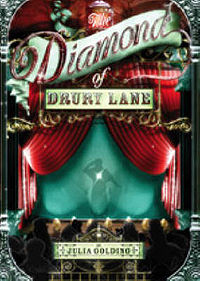
The Diamond of Drury Lane

The Diamond of Drury Lane by Julia Golding
Roaring Book Press, 2006
419 pages
YA; Historical
4/5 stars

Source: Library

Read for YA Book Battle and also because the sequels looked really intriguing.

Cat Royal is an orphan living in the Theater Royal in 1790 London.  She has been unofficially adopted by the theater folk and has lived there as long as she can remember.  Living among the actors, writers, and designers as well as the gangs that control the seedier sections of town is a not too bad existence.  Then one night she hears about a diamond hidden in the theater, which sends her off on vivid imaginings and kick-starts this story.

The next day she meets a new friend, Pedro Hawkins, a former slave (not sure how as slavery wasn't abolished in the UK until 1833) with a remarkable agility and incredible talent with the violin.  His skill attracts the interest of Lord Francis and Lady Elizabeth and a mystery around the treasonous cartoons of "Captain Sparkler" springs up.

Cat is a great heroine.  She's a colorful heroine with the plentiful sprinkling of the slang of the times and she speaks her mind.  In general, she's up for any adventure and she's very loyal.  Cat also begins writing, something I bet becomes more prominent in later books as she ages.

Besides being a fun adventure, this book also treats themes of gender, race, and class. Cat would love to be part of her friend Syd's gang but he will only let boys join, even if he's only known them for a few hours.  She protests the unfairness of this and hopes that Syd doesn't harbor deeper feelings for her.  Pedro is easily accepted but some of the meaner characters do mock him based on the color of his skin and claim their own superiority over him because of that.  Class is another element; lords have the final say while penniless orphans can only hope for some protection.

My main quibble is that it was a little long and the mystery is a bit simplistic (my rationale is that I figured it out and I hardly ever do that).  There's a lot of promise for future books.

Overall: Great historical mystery with an engaging main character-definitely excited about the sequels.

Read for British Books Challenge.

Monday, May 2, 2011

Threads and Flames

Threads and Flames by Esther Friesner
Viking, 2010
386 pages
YA; Historical
4/5 stars

Source: Library

Read for YA Overlooked Book Battle.

This book was a great historical fiction novel with its main conflict coming from the famous Triangle Shirtwaist Factory Fire on March 25, 1911 where the main character Raisa and most of her friends work. But that doesn't occur until near the end of the book.

Raisa just managed to survive typhus in her Polish shtetl before she embarks on a journey to America to meet her older sister Henda who has lived there for the past four years.  On the boat, she befriends Zusa, a young woman about her age, and begins to take care of little Brina whose mother dies on the ship.  Upon arrival, she begins to search for Henda.  Unfortunately Henda had received a letter informing her of Raisa's death and is thus nowhere to be found.  Luckily for Raisa, though, she finds a good room to let and soon starts earning money.  Eventually all of the main young characters end up working for the Triangle Shirtwaist Factory leading to the fire that devastates a community and highlights the inequities of the American economic system.

Raisa was a very brave girl; she turns fourteen on the ship over but she acts much more maturely than me and I'm twenty-one.  She takes on the responsibility of caring for Brina and she works tirelessly to master sewing with a machine as well as learning English.  Of course, she also gets to have fun with her friends Zusa, Italian immigrant Luciana, and dreamy Gavrel, the son of her landlords.

The historical details were fantastic! Although this is not my time period, I felt very immersed in the world described.  Although not much time is spent there, the worst part (and worst because accurate) was the descriptions of the sweatshops, awful places where the cloth is valued more than the people; as Friesner reminds us in her author's note, such places still exist, even in America where they ought not to.  The description of the fire is also powerful with the confusion and the people who jumped out of the window in order to avoid being burned particularly grabbing me.

Despite those sad facts, there is also the optimism of the American dream with Raisa looking to be a teacher and Gavrel looking to be a rabbi, which would give them a better life than they had known and give any children a better life too.  The ending is pretty optimistic.

My biggest quibble was the search for Henda.  Raisa starts strong but as time passes and no sign of her emerges, her fears begin to master her.  The way she finds Henda seemed way too coincidental to me and I rolled my eyes a little.  However I'm glad that Raisa got to find out what happened to her sister so that's good.

Overall: A good historical novel calling attention to the dark tragedies lurking in the American dream.

Cover: I like the title within the charred fabric scraps or paper.

Tuesday, April 19, 2011

The Lightkeeper's Ball

The Lightkeeper's Ball by Colleen Coble
Thomas Nelson, 2011
288 pages
Christian Historical Romance Mystery
4/5 stars

Source: A free e-copy via Netgalley in exchange for an honest review.

This is the third book in Mercy Falls Series and it features both of the couples from the first two who are expanding their families.  But the focus is Olivia Stewart who is coming to Mercy Falls from New York City in order to discover the answer to many questions.  Did her sister Eleanor, who's terrified of water, really drown herself? Could Eleanor's fiance Harrison Bennett have something to do with it? And
could Olivia bring herself to marry Harrison in order to help the Stewarts recoup their money?

First things first: Harrison Bennett is a fantastic hero! He is an honorable man of God, skilled at numbers and management as well as the mechanics that would enable an aeroplane to fly, thoughtful gift-giver (diamonds!), and eager to love and cherish a prospective wife.  I loved reading about him!

Unfortunately his mate and main character of this book Olivia Stewart is much less to my liking.  She spends most of the book masquerading as Lady Devonworth, her title true, but she ought to have told Harrison the truth much sooner especially because they're engaged for much of the book!  Originally it is a sham but once it is revealed to be made of love, she should have bit the bullet and told him.  Instead he suffers from the inevitable feelings of betrayal that might have been lessened had she told him earlier instead of hearing it from someone else.  After the troubles with Eleanor, Harrison had some (completely understandable) trouble with the Stewart family, so Olivia feared his reaction.

She also struggled with a woman's place in society; she had been trained from birth to be the "perfect" wife who plans parties and socializes.  But Harrison helps her to see that Jesus values her for who she is and that she can be much more than just a wife.  With his love and support, she can do anything.  Additionally Olivia is a remarkably clumsy heroine as she manages to sprain her ankle and a wrist in addition to other bruises; it got to a point where I just wanted her to sit so she could protect herself.

The mystery was less engaging to me than the romance although Harrison's efforts to help warmed my heart.  Basically Olivia thinks her father is dead but then finds a letter suggesting he may not be.  Plus it turns out he left most of his fortune to her illegitimate half-brother about whom she had known nothing.  And it seems that someone is trying to kill her.  The machinations by the villain(s) overwhelmed me.  I was much more interested in the romance, the friendships Olivia develops with Addie and Katie, and Olivia's growing understanding of God.

Overall: A good historical romance; definitely recommended for those who have enjoyed the previous Mercy Falls books and for those looking for a GREAT hero!

Cover: GORGEOUS-I love covers with a big, bold dress capturing the eye.

Monday, April 18, 2011

The Betrayal of Maggie Blair

The Betrayal of Maggie Blair by Elizabeth Laird
Houghton Mifflin Books for Children, 2011
420 pages
YA; Historical
4/5 stars

Source: Free e-ARC via Netgalley in exchange for an honest review.

I wasn't sure what to expect with this book; I knew there was something about witches and Scotland in the past but what did the title mean by "betrayal?"  And then I saw it was quite long (for a YA book) and I was worried about if the story could be sustained-I generally encourage shorter works, whether it be book, movie, or song. I ended up pleasantly surprised as the pace was very good overall.

The story covers a huge journey made by Maggie, both physically, through Scotland, and mentally, as she examines her faith and her conscience.  The story opens with the young orphan living with her grandmother Elspeth in a tiny shack on a Scottish island.  A neighbor leads accusations against the two women that leads to their conviction as witches.  Maggie is fortunate enough to be able to escape and she goes to her uncle's house.

At her Uncle Blair's house, she is welcomed, not entirely warmly, and begins to integrate herself into their life.  They are Covenanters-Presbyterians who reject King Charles II's intrusion into their religious life and subject to dreadful oppression.  Indeed their beliefs lead to Uncle Blair's arrest where he is moved across the country. As their suffering increases, Maggie makes the decision that she will go save him.

This results in her journey to Edinburgh (I'm not entirely sure about distances as they're represented in how long it takes to walk-but about two days) with a friend Tam from her early days.  His wiliness gets them there safely but Maggie must figure out her own way to save Uncle Blair and to create her own future.

I was absolutely fascinated with the historical background; of course I'm well aware of historical persecution by the various sects of Christianity but the British Anglicans against the Scottish Presbyterians was not well-known to me.  I know the campaign against the Irish Catholics much better.  The work necessary just to survive, just to scrape by was also well represented.  I could feel Maggie's exhaustion over all of the work that had to be completed.

The world Laird drew was dirty and superstitious and confused.  The characters were complex with their good and bad side well-represented.  Maggie is somewhat naive at the beginning but that changes as she makes her way in the world; she is quite fortunate to move without molestation and generally finding a place to stay safely. The story is told from her perspective and I found her a good narrator.  Her questions about faith were fascinating to me.  She doesn't know much about religion but she seeks to come to some understanding of it as well as of her own nature, which leads to her concluding decision.

The other characters were also interesting.  Her grandmother's anger leads to her persecution but she looks out for Maggie until the end.  Tam, a thief and poacher, continually helps Maggie although he also brings the villainous Annie to her door.  Annie is mostly a liar and a thief but she also has a bit of the innocent to her in the beginning. The Blairs seem like good people, although they have their faults too.

I admit that I had expected some romance just because YA tends to have that but it doesn't really.  Maggie expresses some interest in a few guys but nothing comes of it and she retains her independence.  Like in StarCrossed, I appreciated this lack of romance because there was so much going on with the religious/political aspects that it would have been unnecessary.

From what I can tell, this was previously published as The Witching Hour, a title which I don't think fully covers what occurs in this book, but I'm not sure how I feel about this title.  I like the inclusion of Maggie's name but I feel like the ending is not a betrayal so it doesn't fully encapsulate this book either.  The author's note also reveals Laird's family connection to the events described as she had family persecuted in such a manner; that was interesting to learn.

Cover: I think the blues are very striking although some plaid would not have gone amiss!

British Book Challenge and E-book challenge.

Sunday, April 17, 2011

Catching Katie

Catching Katie by Robin Lee Hatcher
Heart Quest, 2003
366 pages
Christian Historical Romance
3.5/5 stars

Source: Library

I was intrigued by the cover of this book as well as the description about a suffragist, Katie, working for a national suffrage amendment in conflict with her best friend, Ben, who loves her and just wants to be married with family.  At first I thought Ben would denigrate women's rights but he's actually supportive of national suffrage and Katie sharing her opinion.  He just wants her to choose a family with him (his dream) over a run for Congress (her dream). And that's where my problem was.  I liked both characters from the start and it was easy to support their friendship.  However their marriage comes about through less than ideal circumstances and it takes too long for them to reconcile (through very contrived means).  I was so frustrated that they married without trying to bring their different plans for the future more in sync.  While Ben outwardly supports Katie, he really wants her to stay at home and be his wife despite her long history of saying that marriage was not in the cards for her.  Both did need to listen to God more but their fights were repetitive and not engaging.

The other characters were fine.  Sophia is Ben's sister and Katie's return awakens Sophia's interest in suffrage and prompts her to make big changes in her life.  Blanche is the schoolteacher who just hates all men without exception and she ends up being the one to help Ben and Katie reconcile (entirely accidentally).  The debates that Katie provokes among the townspeople were great, even if sometimes they consisted of shouts that Katie needed to stay in the kitchen and get a husband.  It's weird to me to think that just one hundred years ago, not all American women were allowed to vote; I love being able to vote and I'm so grateful to women like Katie for fighting for that right for me.

Overall: My problems with Ben and Katie's relationship soured me on the romance but the historical and Christian aspects were good.

Cover: Adorable-especially with the title on the hat.

Sunday, April 10, 2011

She Walks in Beauty

She Walks in Beauty by Siri Mitchell
Bethany House, 2010
392 pages
Christian Historical Romance
4.5/5 stars

Source: Library

I flew through this book as it was arranged just the way I like books with relatively short chapters and lots of section breaks.  That means I can read a section real quick while waiting for something or encourage myself to finish it faster as I say "I'll just read one more section...and then one more...etc."

Clara is a year away from her debut into New York society and grateful as she yearns more for books and academia than balls and a husband.  Her aunt however moves up the year of her debut in order to garner a marriage with Franklin De Vries, heir to a fortune and to a family that once wronged Clara's.  Soon Clara is the belle of the season but she finds herself far more interested in Franklin's younger brother Harry and troubled by her growing knowledge of the dirty world of New York politics.  When tragedy strikes, Clara must decide who she really is.

Clara seems like a pretty typical heroine.  Although too tall and without a fashionable figure, she's a devoted reader and pretty loyal friend and daughter.  Watching her struggle and then triumph navigating the tricky mires of society was amusing and exciting.  Although her aunt was often very harsh, I really loved her.  Toward the end, she explains that she was trying to help Clara survive in a world that is very harsh to women and I could appreciate her motivation. What about Clara's parents? Her mother died a long time ago, bequeathing to Clara a book of Byron (hence the title from a Byron poem) but her doctor father remains dispensing his miracle tonic and preparing for Clara to win the heir to the De Vries fortune and thus restore the family honor.

Of course there's a love story.  Franklin is a bore who loves to talk of himself and his horses while Harry is the friendly, sweet, well-intentioned man who naturally captures Clara's attention.  He is also the one who introduces the main Christian theme that God loves His creation which proves so challenging to Clara's faith.  I was expecting much more Christian language but it was very minor overall.  I imagine non-Christian historical fiction fans could read it and just skip the few passages where a relationship to God is discussed.

There were many little tidbits sprinkled throughout the story such as Jacob Riis's How the Other Half Lives; the painfulness of a corset; men's trips to the Bowery; newspapermen and celebrity; scandal!; the minutiae of society; and medical quackery that were fascinating but not given enough attention in my opinion.  Some receive more than others but despite Clara's sympathy for the poor exposed by Riis, there is never any mention of her attempting anything to help and little chance of that given the ending.  Obviously not all of them could be treated but I would have preferred a tighter focus on a few.

Overall: The Christian content was lacking but the historical details and the character Clara kept me engaged.

Cover: The cover is what attracted me to this book-I think everything about it is very pretty.

Saturday, April 9, 2011

The Girl in the Gatehouse

The Girl in the Gatehouse by Julie Klassen
Bethany House, 2010
391 pages
Historical Christian Romance
4/5 stars

Source: Library

I tried to read The Apothecary's Daughter last year and was disappointed, leading me to label it a DNF.  But I thought this would be different when I opened the book to a quote from Mansfield Park and saw character names bringing to mind that book.  Anything that closely influenced by Austen will probably please me and this mostly did so.

Mariah has been kicked out by her father for her indiscretion and she goes to live in the gatehouse of her aunt's estate, contenting herself with novel writing and spinsterhood.  After her aunt's death, young Captain Bryant lets the house.  He is set on marrying a girl who previously spurned him as beneath her but also develops a friendship with Mariah.  Obviously a romance blossoms but I felt that their story was the weakest overall.  Mariah's feelings over her disgrace, despite being historically accurate, grated on me.  And Bryant acted like a jerk to her; luckily he has a friend who tells him so.

Besides the main romance, there were many subplots-too many in my opinion.  Mariah's former governess and now companion, Dixon, ends up in a love triangle.  Mariah's aunt's stepson intrigues in multiple ways.  A mysterious man lives in the poorhouse across the way; his past is deeply tied to the estate and the sea.  And then there are several little stories in the poorhouse itself.  I enjoyed these subplots and I was able to keep them straight in my mind but I just felt that there were too many.

The writing is fine, without the sharp edge of Austen, but still good.  Historical details were sprinkled in especially about the writing process and how Mariah had to keep it secret because novel writing was scandalous.  The bit that jarred was when the rake who ruined Mariah confessed to such and talked about the double standard.  Would that have really happened? I think not.

The religious aspect was pretty low-key but basically revolves around Mariah needing to forgive herself and Bryant needing to stop striving for his father's good opinion and finding contentment in his Father's grace.  There weren't many Scripture references but there were more than a few discussions about forgiveness and the afterlife.

Overall: A story that owes a great debt to Austen and is a fast, enjoyable read.

Cover: I love the gatehouse, the actual gatehouse that inspired Klassen she shares, and the green and purple.

Read for Christian Fiction Book Club. Hosted by Joy at Edgy Inspirational Romance.

2.  Mariah's situation (sent away after an indiscretion to live in relative isolation) was loosely based on the fate of one of Jane Austen's characters in Mansfield Park (although Maria Bertram was a married woman who had an affair). Did you think Mariah Aubrey's father treated her unfairly? How have attitudes toward "virtue and vice" changed since the early 1800s?
I think her father was a bit unfair.  I understand his decision to send away his daughter because she had disgraced the family but I think her siblings could still have been allowed to interact with Mariah, especially Henry who as a male was held to different standards.  He also could have given her sufficient money by allowing her mother to designate an allowance.  In general attitudes are more permissive (at least in America, a non-virgin woman can still marry anyone) but the double standard persists: women are more likely to be labeled sluts while guys are cheered.  There does seem to be some lessening of that but not enough in my opinion.
6. Did you find yourself growing fond of any character that you did not care for at the outset? Which character was your favorite? Why?
At first I didn't like Dixon because she made me think of the character in North and South, who I don't like.  But this Dixon is quite different and her romance ended up being one of my favorite aspects.  As to a favorite character, I guess I liked Martin the most.  I wanted to like Mariah and Matthew but they had a couple of really annoying aspects to their story so Martin's general goodness shined through the best for me.

Wednesday, March 30, 2011

The Queen's Daughter

The Queen's Daughter by Susan Coventry
Henry Holt and Company, 2010
370 pages
YA; Historical Fiction
4/5 stars

Source: Library

This is hardcore historical fiction; the reader is deeply immersed in the twelfth century following Princess Joan, daughter of King Henry II and Queen Eleanor of Aquitaine, sister of Richard the Lionhearted and John Lackland.  It's filled with the politics of the period as Joan struggles to be her mother's daughter, to survive in a brutal world, and to maybe find love.

I loved being steeped in this world, about which I know very little, and seeing a woman's perspective.  Obviously Joan is pretty privileged as royalty but she's forced into two marriages at the pleasure of her king and is tormented by her familial loyalties.  Her father and her brothers spent a lot of time fighting as did her parents; both parents used their children for manipulative purposes and the effects of that reverberate throughout Joan's life.

However while I loved the historical aspects, I didn't really like any of the characters.  Sometimes I was able to sympathize with Joan but other times I thought she was making a bad decision.  She is married off to William, King of Sicily and despises him as a weakling unlike her father and brother Richard.  She is attracted to Raymond, a prolific womanizer whose morals I found loathsome. The teachings of her mother permeate her mind despite her inability to always institute those sayings (for example that kindness is weakness, leading to her assessment of William).  But I also found Joan fairly compassionate and doing the best she could in difficult circumstances.

I did love Ermengarde unreservedly, a talkative woman who is sort of Joan's best friend although they are not always able to spend much time together.  Richard is a boorish overbearing conqueror and few other characters are in Joan's life long enough to really make an impression.  According to the author's note, Joan died when she was thirty-four but she certainly traveled a lot (England, France, Sicily, and the Holy Land) for that short life.

I also felt the book as a whole was somewhat unsympathetic to Eleanor, who has been immortalized in my mind as Katharine Hepburn and who I thus adore.  Admittedly the portrayal in the book is far more complex than Eleanor=bad, Henry=good.  Both are presented with their share of faults but I would have preferred a more pro-Eleanor perspective.  I guess I should search out some books that focus on Eleanor for that.

Recommended for people who know this time period and/or people who really love historical fiction.

Cover: I love the cover! I think the rich colors and beautiful dress are very attractive.

Monday, March 21, 2011

Look to the East

Look to the East by Maureen Lang
Tyndale House, 2009
345 pages
Inspirational Historical Romance
3/5 stars
First in the Great War Series

Source: Library

Summary: Julitte lives in the small village Briecourt in France, which is soon invaded and taken over by Germans in 1914.  In the cellar of the local church, she discovers Charles, a Belgian in hiding from the Germans.  Will she have the faith in God to survive this terrible war?

When I've read other Christian historical romances, I've found it helpful to break the book down and look at each genre separately because that's how I think about them as I read.

Historical: The historical aspects were very strong, in my opinion the best part.  While the story opens in a peaceful small village in northern France, war soon begins and the Germans occupy leading to privation that only gets more extreme as the book goes from 1914 to the middle of 1916.  I don't know as much about WWI as I do about WWII but everything seemed on target.  I could feel the hunger that gripped the population and the fear from being occupied and from not knowing what was going on with loved ones at the front.

Religion: There is a lot of God talk in this book, definitely not recommended for any non-Christians.  It is believed in the village that Julitte has been gifted with miraculous powers and that her prayer is more powerful.  Additionally Julitte is a faithful Christian who prays a lot especially as the war drags on and she is separated from her love.  She sees so much death even among a civilian and her only recourse is to turn to God.   I liked that one of the Germans is also able to express his faith and hope for an end to the war. While most of the Germans are painted as villains (obviously), there were some nuances.

Romance: This was the part that was weakest for me and I didn't particularly care for either Julitte or Charles.  I appreciated that their romance took some time to grow although it was an instant attraction kind of love.  They talked with each other and she encouraged his faith, which was nice to see.  His determination to be a "hero" annoyed me as it seemed foolhardy and maybe not even what God wanted (not everyone's a hero).

The End: I'm not sure I entirely buy it. SPOILER: Did Ori sell out the hidden men or how were they discovered?  The change to safety occurred so rapidly as Charles returns to spying and Julitte goes off to rediscover her family.

Overall: This book never clicked for me. I don't know if it was something about Julitte's character or maybe Charles's but despite the many things I liked about it, I feel only neutral towards the book as a whole.

Sunday, March 20, 2011

Prisoners in the Palace

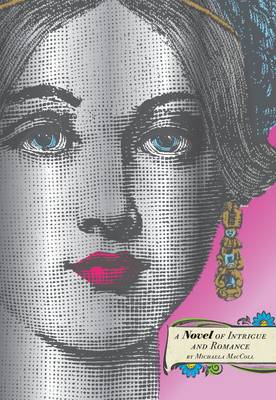
Prisoners in the Palace by Michaela MacColl
Chronicle Books, 2010
352 pages
YA; Historical Fiction
4.5/5 stars

Source: Library

Summary: Liza was orphaned before she was able to enter Society, leaving her flat broke.  However she is fortunate enough to gain a position as lady's maid to Princess Victoria, catapulting her in to a world of intrigue and suspicion at Kensington Palace.  Caught between worlds, Liza must forge her own path and future.

I alternated a lot over whether I liked the portrayals of Liza and Victoria in this novel.  On the one hand, Liza was not that grand of a lady no matter what she wants to think; on the other hand, she's an orphan struggling to make her way in the world.  On the one hand, Victoria grows up to be a great queen and hints of compassion appear here; on the other, she's so mercurial and almost always self-absorbed.

I'm somewhat familiar with Victoria's childhood, especially with the villain Sir John Conroy who would stop at nothing to increase his influence over her as he had over her mother.  Whether he can be in charge of her correspondence, her purse, her throne, whatever, he wants it.  He knows no shame and was a fantastic character!  His plotting drives the main plot, culminating in a suspenseful ending before Victoria's ascension. Albert, future husband to Victoria, also makes a brief appearance; he is a prig and distinctly unworthy of her as presented at this point.  I personally am not a big fan of Albert ever but she loved him.

But there are also entirely fictional if representative characters.  Annie, Liza's predecessor as lady's maid, loses her position due to a pregnancy and suffers a huge downward spiral as I'm sure many women did, confronted with the social mores of the period and the lechery of upper-class men.  Will is a newspaperman and friend of Liza's whose broadsheets help inform public opinion.  Inside Boy, one of my favorite characters, is an urchin who teaches the colorful street patter and also aids Liza when in dire straits.  They added considerable color and fun to the novel, balanced against the more serious degradations suffered by Victoria from her mother and Sir John.

Overall: I really enjoyed this book except for some annoyances with Liza.

Cover: This is a gorgeously designed book-even if historical fiction isn't your thing, I recommend examining it at a store.  The back is designed like a newspaper with a combination of stories about the actual novel and blurbs from authors and the inside is also beautiful.

Wednesday, February 23, 2011

Water for Elephants

Water for Elephants by Sara Gruen
Algonquin Books of Chapel Hill, 2007
331 pages
Fiction; Historical
3.5/5 stars

Source: My mom has been trying to get me to read this book for years and I finally broke down and read it after one of my IRL friends recommended it.

The book is split between Jacob Jankowski's life as a ninety or ninety-three year old man and his reminisces about his life as a twenty-three year old traveling with a circus during the Great Depression.  He falls in love, sees an entirely different kind of life, and survives.

I was most impressed by the circus anecdotes, most of which are revealed to have been true by Gruen in the author's note.  The animals and other performers were very interesting.  Jacob, for me, was very boring with little about him that surprised me.  Marlena didn't have much of a personality.  She was just pretty with grace and a love of horses.

Overall, I was left with a feeling of "so what?"  I can see why my mom liked this; it's just the kind of book she would like and if I had read it first, I would totally have recommended it to her.  But I didn't love it as so many seemed to have and like I wanted to love it.

This has been made into a movie; I'm not sold on Robert Pattinson as Jacob (a redheaded Pole) but I'm okay with Academy Award winner Reese Witherspoon as the brunette Marlena and very intrigued by Academy Award winner Christoph Waltz as her violent husband August.  I don't know if I'll see the film in theaters but I know my mom will and she'll tell me about it.
Related Posts Plugin for WordPress, Blogger...